Immunotherapy
Essential information and latest research on cancer immunotherapy for leiomyosarcoma patients and caregivers.
CRI Patient Guide
A Patient's Guide to Cancer Immunotherapy
Hope in Action is a clear, compassionate resource for patients, caregivers, and loved ones. It explains what immunotherapy is, how it works, what to expect during treatment, and how to get support.
What is Immunotherapy?
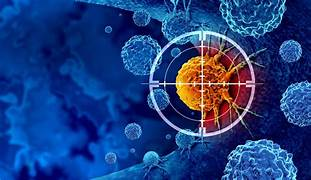
Immunotherapy uses a person's own immune system to fight cancer. It can boost or change how the immune system works to find and attack cancer cells.
– American Cancer Society
LMS Research
Targeting Molecular Features of Leiomyosarcoma
Patient FAQ
Is immunotherapy as hard on you as chemo?
Side effects vary and are highly subjective. Chemotherapy affects all rapidly dividing cells, while immunotherapy causes immune-related side effects ranging from mild to severe.
Can you combine targeted therapy with immunotherapy?
Yes, immunotherapy might consolidate dramatic tumor responses into durable remissions, reducing the risk of drug-resistant clones. Learn more
What is combination immunotherapy?
It helps T cells find and fight cancer. For some, it stops cancer and shrinks tumors. Thousands of clinical studies are testing combinations for many cancers.
What is the treatment of choice for leiomyosarcoma?
Management depends on disease site, tumor size, grade, and patient factors. Options include surgical resection, radiation, and chemotherapy. A multidisciplinary approach at high-volume sarcoma centers is recommended. NCBI Reference
Sarcoma Immunotherapy Research
Currently, there are three FDA-approved immunotherapy options for patients with sarcoma, and many more are being investigated in clinical trials. Several other immunotherapies have shown effectiveness in clinical trials and could become approved for patients in the near future.
Cancer Research Institute - Sarcoma
Comprehensive overview of FDA-approved immunotherapy options and ongoing clinical trials for sarcoma patients.
View ResourceASCO: Current Data and Promising Approaches
Sarcoma is characterized by numerous subtypes each with unique biology/immune microenvironment; therefore, a histology-specific approach is required.
Read StudyAmerican Cancer Society - Soft Tissue Sarcoma
Immunotherapy medicines help the immune system recognize and destroy cancer cells more effectively. General sarcoma drugs and symptoms information.
Learn MoreCancer Research Institute's Glossary of Medical Terms
Essential medical terminology found in research studies and publications to help you better understand immunotherapy and cancer treatment.
Adjuvant therapies
Additional cancer treatments given after the primary treatment, such as surgery, to lower the risk of recurrence. Immunotherapies are often used as adjuvant therapies.
Adoptive T-cell therapy
A type of immunotherapy that enhances the natural cancer-fighting ability of your body's T cells by removing immune cells, growing and/or making changes to them outside of your body, and then re-infusing them back into your body.
Antibodies
Proteins that bind to antigens on harmful invaders in your body (such as germs and viruses). They also mark cells for attack and destruction by other immune cells.
Antibody-drug conjugates (ADCs)
A type of targeted cancer treatment in which a chemotherapy drug is attached to an antibody that delivers the drug directly to cancer cells.
Antigen
Any substance (such as a protein) that causes the immune system to respond. Cancer cells often have antigens that the immune system can learn to recognize and attack.
B cells
Cells that release antibodies to defend against harmful invaders in your body. Each B cell is programmed to make one specific antibody (such as an antibody to the common cold virus).
Biomarkers
Proteins or genes that provide a more detailed understanding of a tumor, its prognosis, and the potential response to treatment.
Biopsy
A procedure in which a doctor removes a small sample of tissue. This sample is then examined under a microscope so that cellular abnormalities can be observed.
Bispecific antibodies
Specially engineered proteins that can bind to two different targets at the same time to help the immune system attack cancer.
Cancer vaccines
A type of immunotherapy that train the immune system to recognize and attack cancer. Some cancer vaccines prevent cancer, while others treat existing cancer.
Chemotherapy
Often called "chemo", is a cancer treatment with drugs that kills fast-dividing cells. Chemotherapy can be used alone or with surgery, radiation, and/or immunotherapy.
Chimeric antigen receptor T-cells (CAR T-cells)
A type of engineered T cell used in adoptive T-cell therapy. They have special receptors called CARs that recognize specific proteins on cancer cells and eliminate those cells.
Clinical trials
An important part of medical research that form the basis for the approval of all new treatments. The primary goals of clinical trials are to figure out whether a treatment works and if it is safe.
Cytokines
Messenger molecules that help control the growth and activity of your immune system cells and blood cells.
Genetic mutations
Changes in your DNA sequence. Some genetic mutations are associated with some types of cancer, and some genetic mutations may indicate a better chance of response to a specific immunotherapy treatment.
Immune checkpoint inhibitors (ICIs)
A type of immunotherapy used to "release the brakes" on the immune system, allowing your body to respond more aggressively to cancer. ICIs are a type of immunomodulator.
Immune system
A highly evolved network of organs, cells, and molecules that helps defend your body against threats such as bacteria, viruses, and cancer.
Immune-related side effects (irAEs)
Reactions that happen when the immune system becomes overactive and starts affecting healthy parts of the body. These side effects can impact organs like the skin, liver, lungs, or intestines and often need prompt treatment.
Immuno-oncology
The study and development of cancer treatments that use your body's own immune system.
Immunomodulators
Sometimes called immune modulators, are drugs that boost or modify how your immune system responds to cancer. They can enhance the activity of your immune cells or increase the production of signals (like cytokines) that help your body fight cancer more effectively.
Immunotherapy
A form of cancer treatment that uses the power of the body's own immune system to prevent, control, and eliminate cancer. Immunotherapy can be used for many types of cancer, either alone or in combination with other treatment types.
Monoclonal antibodies
A special type of protein designed to target antigens, or markers, located on the surface of cancer cells. Antibodies locate antigens and recruit immune cells to attack.
Neoadjuvant therapies
Additional cancer treatments given before the primary treatment, such as surgery, to make the primary treatment more effective. Immunotherapies are often used as neoadjuvant therapies.
Oncolytic virus therapy
A type of immunotherapy that uses a modified virus that can both cause tumor cells to self destruct and activate a greater immune response.
Personalized (or precision) medicine
Uses information about a person's genes, proteins, and/or other factors to create a treatment plan for their specific cancer.
Proteins
Molecules made up of amino acids. They are the basis of your body's structures, such as skin and hair, and of other substances such as enzymes, cytokines, and antibodies.
Radiation
Radiation therapy uses high-energy particles or waves to destroy or damage cancer cells. It is one of the most common treatments for cancer and can be used alone or with other forms of treatment.
Recurrence
A term used to describe the return or progression of cancer following treatment.
Remission
Refers to a complete or partial disappearance of the signs and symptoms of cancer in response to treatment. It is a period in which the disease is considered under control.
Staging
Used to determine the extent (or "stage") of cancer. It is based on whether a tumor is local to its area of origin or has spread to the lymph nodes or other parts of your body as well as how deeply it has invaded surrounding tissues.
T cells
Cells that help identify and destroy infected or abnormal cells in your body. Some T cells directly kill their target cells, while others coordinate your immune response by signaling other immune cells.
Tumor
An abnormal lump or mass of tissue. Tumors can be benign (non-cancerous) or malignant (cancerous).
Tumor microenvironment (TME)
Includes the cells, blood vessels, and other substances that surround and support a tumor. It can affect how the cancer grows and responds to treatment, including immunotherapy.
Source: Cancer Research Institute - Hope in Action: A Patient's Guide to Cancer Immunotherapy