 Caregiver
A Father, A Fighter
Bobby Whitfield
Dad was diagnosed with a Rhabdomyosarcoma when I was just 12 years old. It was the scariest thing that could happen to our family. He entered a clinical trial at NIH--remission came after a hard road of chemo and radiation.
Read full story
Dad was diagnosed with a Rhabdomyosarcoma when I was just 12 years old. I remember at the time it was the scariest thing that could happen to our family. My father was admitted to NIH in Bethesda MD for a clinical trial. During the same time another family from our hometown was getting the same scary diagnosis. He too as well attended NIH on the same protocol. NIH started both patients at the same time with 2 different treatment plans. My dad always had a deep dislike of doctors, he always told me, "They call it practicing medicine for a reason."
A few months later the other gentleman was beaten by Rhabdomyosarcoma. Dad's treatment by no means was easy. He was administered chemotherapy and radiation. Being raised Jehovah's Witness he also tried many herbal remedies, and teas. I do not recall how long my father was treated; I do remember the day he celebrated the word remission.
May 1989, I graduated high school and was set for college. Our family doctor who had previously diagnosed my dad had scheduled a hernia operation for myself. I lifted a lot of weights during football practice and apparently pushed it. June 19th, I awoke after surgery, all I remember is a couple of doctors looking for moles on my body and discussing my surgery with concern. Due to my father being an NIH patient I was put on a plane within a few days where I was given my LMS diagnosis.
I was also informed that it had spread to my lungs, and I had 24 tumors in them. At that time due to my age, I was allowed to stay on the 13th floor pediatrics. There's a whole new level of scared when being told you have possibly 3 months left of your life. I recall sitting in a conference room with several doctors and this was the best outcome! How? Unless I wanted to start an intense treatment of chemotherapy. I knew at this time everything I had watched my father endure was now my only hope.
I used to keep a journal of everything that was administered to myself and every test that I had done. I used that as a catalyst to how I was going to feel. I remember only a couple of the names of the chemotherapy treatments, mainly because they really left an impression. Adriamycin and Cytoxan, combined every 13 days. It always felt like death and would put me out for a couple of days. I would fly back home to KY in between treatments where I pretty much was taken straight from the airport to our local hospital and admitted. During that time, I would receive blood, platelets as well as a mild chemotherapy. About 4 months in NIH had not seen the results from the chemo that was desired. I was then put on a chemo/radiation protocol. This lasted for 3 months, luckily for myself and my family NIH had just opened The Children's Inn at NIH. I was amongst the 1st group of kids to stay there with my family. Most days I would receive radiation and then go tour around Washington, DC or take some of the family trips the hospital offered with my chemo pump constantly going.
I will never say the road was easy in fact it was nothing but that. There was a social worker that I talked to that offered me the opportunity to donate semen in case I would like to have kids. "Why would I want to put my kid though this?" My kidneys had shut down from all the chemo at least twice. In 15 months, I spent 396 days in a hospital and had 169 blood transfusions. In the early 80's AIDS had become a pandemic. Luckily, I only contacted Hepatitis C.
I never finished all my treatments. I believe I had 3 left when the doctors discovered a dormant tumor lodged in my left lung. The doctors wanted to remove some of the lungs and tissue around them. This was probably the biggest decision my father ever let me make in my life. Dad asked me what I wanted to do, and I was done. Mentally and physically.
There are a lot of factors that contribute to 33 years LMS free. I attribute a lot of this to my family and knowing that a diagnosis of cancer does not mean death. I thank NIH for allowing myself to be a pediatric patient. When you see children that are younger than yourself struggling to walk down the hallway with their IV tree, or infants clinging to their mothers because they are scared. It changes you. The many doctors and nurses that consulted and comforted myself as well as my hospital counselor. I wish I remembered more of their names; they would be proud to see me now. The biggest factor is my attitude. When given the decision to either lay down and die or stand up and fight. I choose the fight. As a survivor, I will guarantee that you, and nobody else understands your body like yourself. You are your biggest advocate.
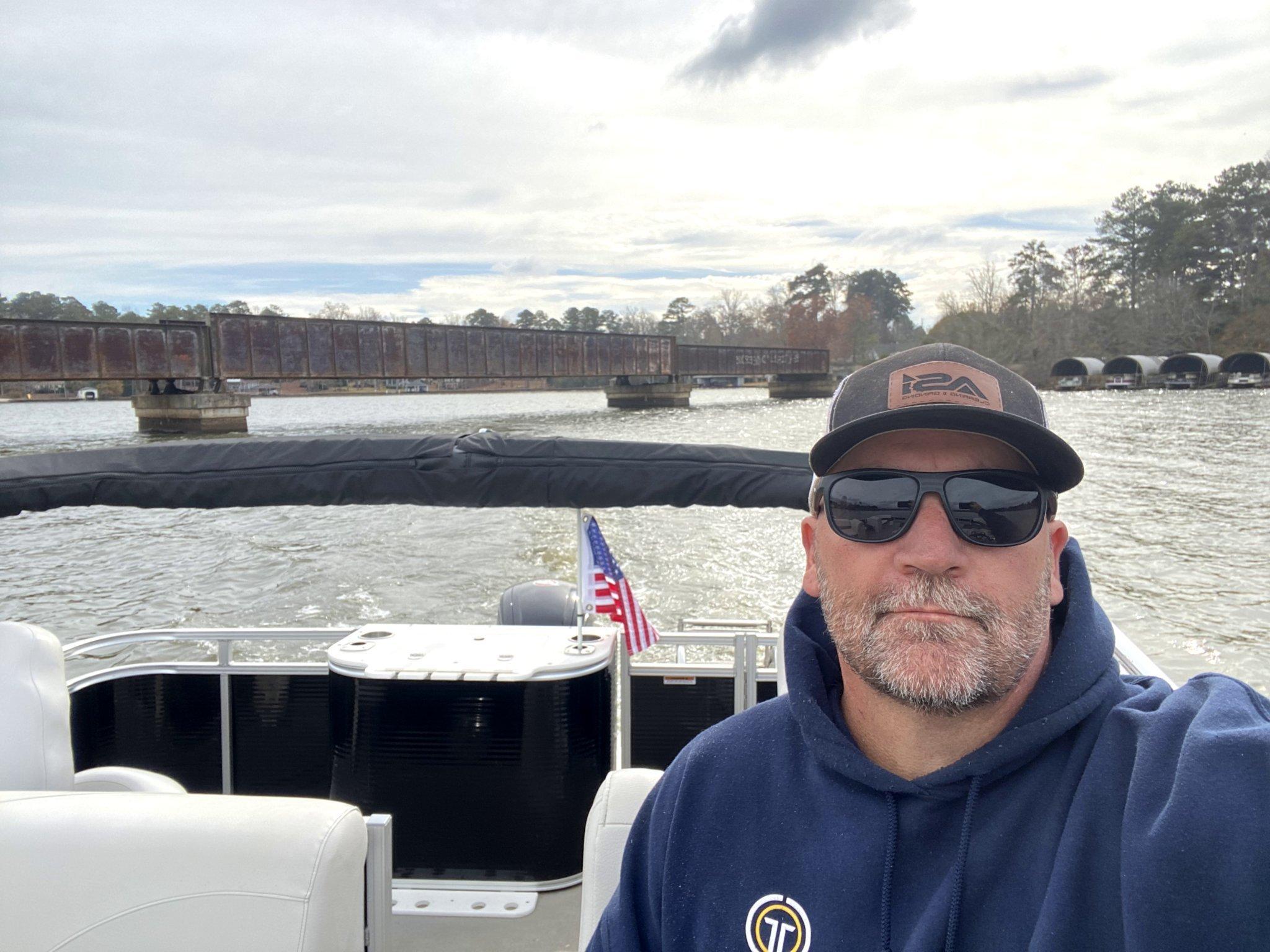
I am now 51 years old. I do have complications from chemotherapy and radiation to this day. I have been treated for Hepatitis C and cured. I like everyone else that has been diagnosed with cancer no matter what kind constantly check for knots, bumps, or anything else that is questionable. I am happily married with 2 stepchildren. My wife and I decided in 2019 to find a simpler life and moved to a rural area of Georgia and live on a lake. Although LMS is a rare disease I have volunteered for several fundraisers, as well as being available to talk through organizations such as the LMS LifeLine Buddy and Inmerman Angels. I like all those before me fighting LMS are an inspiration, and a miracle. Nobody fights alone and we will get to the cure.